Upcoming Cruises

TBD

Tuesday, February 16, 2010

CHINA & THE US: Speaking too softly

Feb 15th 2010 | NEW YORK | From The Economist online

AP

Relations between America and China may chill over a meeting with the Dalai Lama

IT IS bound to be a controversial meeting. The Dalai Lama, Tibet’s spiritual leader, goes to Washington, DC, this week and will sit down with President Barack Obama for the first time on Thursday February 18th. American presidents have long been happy to meet the Tibetan leader and to tolerate subsequent angry huffing from China, not least as a means of responding to public concern over human rights without doing anything serious to jeopardise trade or other ties with Beijing.

But in Mr Obama’s case, with China increasingly assertive internationally and the American president perceived in many quarters as cautious, even timid, in foreign policy, the encounter with the Dalai Lama has assumed extra significance. Mr Obama will be studied closely. Human-rights activists will listen with care to the language that the American president uses, straining to hear whether he goes further than merely suggesting more dialogue between Tibetans and the Chinese leadership. Might the president dare to deliver real criticism of repression and human-rights abuses in Tibet?

Kenneth Roth, the head of Human Rights Watch, an activist group in New York, offers a mixed assessment of Mr Obama’s foreign policy so far in its treatment of human rights. He suggests that no other recent American leader has taken such care with his rhetoric, judging how it is received by the rest of the world. But substantial steps too rarely follow Mr Obama's fine words. The president’s speeches—as in Cairo last year—have helped to set a conciliatory tone for American foreign policy, and to reassure Muslims and others that America is not determined to seek confrontation for the sake of it. Thoughtful comments to African leaders, urging the continent to develop strong and democratic institutions, have also been well received. But Mr Roth sees little evidence of a leader who is prepared then to press reluctant regimes, as for example did Ronald Reagan (and before him, Jimmy Carter) in pushing the Soviet Union to sign up to an international commitment, the Helsinki Final Act, which promoted individual rights.

Mr Obama’s foreign-policy approach of seeking engagement with opponents such as Iran, in an effort to establish dialogue and more effective diplomatic channels, has made it harder for him to beat the human-rights drum loudly. But by failing to speak up about repression, the American leader risks being perceived as weak. His muted reaction to the rigged presidential elections in Iran and the violent repression that followed (and continues) has seemed deferential. His eagerness to “reset” relations with Russia, for example by scrapping a planned anti-missile defence shield in eastern Europe, has coincided with near total silence over the murders of journalists and the clamping down on democracy in that country. It is unclear, in either case, that biting his tongue has brought any gains from the respective regimes.

Particularly troubling has been America's attitude to China and human rights. After Hillary Clinton’s first visit to China as secretary of state, in February 2009, she announced that concern over human rights should not “interfere” with getting co-operation on other issues such as climate change and the global economy. Human-rights defenders were deflated. Mr Obama then avoided meeting the Dalai Lama when he visited America in September and postponed a scheduled meeting in October, to avoid upsetting the government in China ahead of a presidential visit. During Mr Obama’s subsequent visit to China, he made few and limited comments on human rights. The Chinese government responded by becoming more assertive. It helped to scupper a deal at the Copenhagen summit on climate change in December and snubbed the American president by sending a deputy minister to a crucial meeting. China has generally proven to be increasingly unwilling to co-operate with America, for example over United Nations sanctions against Iran.

The administration, however, may now be toughening up. American rhetoric over Iran has become firmer. On Monday Mrs Clinton warned that a military dictatorship was emerging in Tehran. Relations with China, too, have become frostier, for example over a long-planned (and routine) decision by the American government to sell weapons to Taiwan. Mrs Clinton has also spoken up more forcefully about the need for internet freedom in China, in the wake of sophisticated cyber-attacks on Google that many believe had Chinese government fingerprints on them. This week’s meeting with the Dalai Lama is thus a moment to demonstrate that Mr Obama is ready both to signal his concern for human rights and that his foreign-policy is becoming more assertive.

View Article in The Economist

S. KOREA AT THE OLYMPICS: Koreans slam Ohno in wake of 1500m final

Posted: Feb 16, 9:54p ET | Updated: Feb 16, 10:31p ET

Lee says Ohno 'did not deserve to stand on the podium'

VANCOUVER (AFP) -- U.S. short track skater Apolo Ohno has been portrayed as unworthy of a medal in a worrying echo of the bitter resentment which erupted between America and South Korea at the controversial 2002 Olympics.

Ted Robinson and Andy Gabel marvel at the chaos that has followed Apolo Ohno in his skating career and recap the exciting finish to the men's 1,500m race.

Ohno finished runner-up to Lee Jung-Su after two other leading Koreans, Sung Si-Bak and Lee Ho-Suk , collided and crashed into the boards around the final turn in the men's 1500m final on Saturday at the Vancouver Olympics.

The silver was the sixth Olympic medal for Ohno who surpassed several retired competitors who have five each. He also tied long-track speed skater Bonnie Blair's all-time U.S. record of Winter Olympic medals.

But Korean media slammed Ohno's post-race comments that Korean skaters deserved to be disqualified in a fresh flare-up of the antipathy which surrounded him after he won the same event at the 2002 Salt Lake City Games.

In the U.S. city, South Korean star Kim Dong-Sung finished first in the 1500m final but was disqualified for blocking Ohno around the final turn.

"I was hoping there was going to be another disqualification like in Salt Lake City," Ohno told reporters.

"The whole race there was a lot of contact, bumping, grabbing. It was a crazy race," added 27-year-old Ohno, who also won the 500m gold in Torino four years ago. "Typically in short track, there's not supposed to have any contact, or very little contact."

But Lee Jung-Su told Korean media it was Ohno that was "swinging his arms violently" in the semifinals and final without showing it to the referees.

"He did not deserve to stand on the podium," Lee said.

Ohno was seen pushing Lee in the semifinal in a video clip which was repeatedly played on Korean television, according to a member of the South Korean delegation in Vancouver.

"Now the bad feeling toward him seems to be coming back," the official said.

Ohno was seen throwing up his arms behind Kim in the Salt Lake City final as if he was blocked, a gesture widely mocked by Korean media as "Hollywood action" at that time.

Afterwards, Kim's fans sent 16,000 angry e-mails, which crashed the International Olympic Committee's website.

Ohno skipped a 2003 World Cup event in South Korea for security fears. In 2005, he finally went there and won races before an unexpectedly friendly crowd.

Lee Jung-Su has now set his sights on a medal sweep with the 1000m heats starting on Wednesday.

The 1000m and 500m finals are to be held on Feb. 20 and 26.

"We are trying to go for all the medals again this time," Lee told reporters on Tuesday. "Because of the mistake we made during the last race we are being careful."

Related to this article

Video

Slideshows

Stories

View AFP Article on NBC Olympics

BEIJING, CHINA: 1,200 new cars hit Beijing every day: state media

Rush hour traffic on a major road in Beijing

(AFP) – Aug 15, 2009

BEIJING — More than 1,200 new cars hit the roads of China's capital Beijing every day on average in the first seven months of the year [2009], state media reported Sunday.

The Beijing Traffic Management Bureau reported the registration of 261,000 new vehicles -- 97 percent of which were private cars -- from the beginning of January until the end of July, the official Xinhua news agency said.

The figure, a nine percent increase from the same period last year, came to an average of 1,231 new cars a day.

Beijing's air has for many years been among the most polluted in the world, with the fast-rising number of cars on the road one of the major contributors.

However the government has implemented several policies to try and curb pollution, including traffic control measures, moving factories out of the city, and requiring cars and buses to use cleaner fuels.

According to the report, Beijing had 5.5 million drivers by August 6, out of a total population of 17 million people.

View AFP Article

JAPAN: Super Mario endures as games come and go

News photo

Mario magic: Shigeru Miyamoto, creator of Nintendo Co.'s long-selling Super Mario video game series, demonstrates "Super Mario 64" in his Kyoto office in 1997. AP PHOTO

Thursday, Nov. 26, 2009

By BARBARA ORTUTAY, The Associated Press

NEW YORK — You might call him the Mickey Mouse of video games. He's reminiscent of a doughnut, round and sweet and comforting. He's also a vessel, devoid of a real personality so you can live vicariously through him.

Mario, the pot-bellied Italian plumber with a penchant for rescuing princesses, collecting golden coins and grabbing magic mushrooms, has been around for nearly three decades. And even though he hasn't changed much, the latest game he stars in, the newly released "The New Super Mario Bros. Wii," is one of the holiday season's top titles.

Created by legendary game designer Shigeru Miyamoto, Mario is a recognizable character even to people who don't play video games. He pops up in Halloween costumes — blue overalls, red hat, gut and all — as does his brother, Luigi. Mario has been in cartoons and movies (though some were best forgotten), and he graces oodles of official and unofficial Mario merchandise.

"I like him. I like him a lot. He has a cool mustache," says Colin Gaul, 9, from Portland, Ore. "He is awesome because he is brave and he's been on a lot of adventures. And his favorite color is red and mine is, too."

Colin first played a Mario game when he was 5, on Nintendo Co.'s hand-held Game Boy system. On the Wii, Colin has played "Super Paper Mario" and "Super Smash Bros. Brawl," which features a cavalcade of Nintendo characters duking it out.

But Colin wasn't even born when Super Mario emerged.

First called Jumpman, the character debuted in 1981 in the arcade game "Donkey Kong," in which Jumpman had to save a damsel from a big ape. His first job was carpentry but later he became a plumber, and in many games he travels up and down in a world of underground pipes.

In the mid-1980s, Nintendo and Mario helped save the U.S. video game industry, which was on the verge of imploding after early popularity. Terrible games — most infamously "E.T. The Extra-Terrestrial" — had flooded the market, and "people didn't realize that video games were a burgeoning industry," says Scott Steinberg, lead video game analyst at Digitaltrends.com. "They thought it was a fad."

It wasn't. With the launch of the Nintendo Entertainment System in 1985, which in the U.S. came bundled with "Super Mario Bros.," video games became a household phenomenon. Nintendo sold 60 million of the consoles, often called the NES.

In 2008, Americans spent more than $21 billion on video game systems, software and accessories, according to the NPD Group. Even with a recession and industry slump this year, the number will likely be close to that, with a good chunk of the money going to Nintendo. The company has been able to stay profitable, thanks largely to its Wii and the hand-held DS being the world's top-selling gaming systems.

In all, Nintendo has sold more than 222 million games in its Super Mario franchise. There are more than 100 games, for various gaming systems, in which Mario is the primary character, and many more in which he makes appearances.

The company's creation of an Italian character is now video game folklore. In his book "Game Over: How Nintendo Conquered the World," David Sheff wrote that Mario was named after Nintendo's U.S. landlord, who was demanding back rent from the company's fledgling U.S. arm. Nintendo now won't confirm or deny the story.

Perhaps more important is that many of the features that define Mario came about from shortcuts that were needed in the early days of video game design, when arcade units had puny computing power and displayed few colors. He wears a hat, for example, so that his creators didn't have to render hair. His supersize mustache easily hides facial expressions — which even now remain difficult to program into video games.

"The reason he continues to be so popular is that Mario is basically an everyman," Steinberg says. "Behind those bushy eyebrows, jolly belly, is gamers themselves. Short, balding, goofy — how many gamers does that describe?"

Miyamoto has called Mario a "convenient tool" who can be used with a range of games, whether they're racing titles such as "Mario Kart" or take place in the magical world of the Mushroom Kingdom where Mario fights to save Princess Peach.

The new game is a throwback to Mario games of the 1980s and '90s, played out in two dimensions rather than three. The characters mostly move left to right — jumping on platforms, stomping enemies and ducking through pipes into hidden areas.

Miyamoto says he hopes the latest installment attracts both Mario experts and people new to the game. It has a multiplayer option, a first for a Mario game, that lets four people play alongside one another, with better players helping less experienced ones.

Ian Bogost, a professor who studies video games at Georgia Tech University, says Mario's enduring popularity is not merely about nostalgia for the 1980s.

"Mario is more like a brand," he says.

And in Mario's case, the brand stands for good, clean fun. Colin's mother, Ninou Gaul, 33, who played Mario games as a kid, still occasionally picks up the Wii controller.

"It's timeless," she says, "and the level of violence is nothing I would object to."

View Article in the Japan Times

JAPAN AT THE OLYMPICS: US women fall short against Japan in opener

VANCOUVER, BC - FEBRUARY 16:  The United States team wait for a result during the women's curling round robin game between Japan and the United States on day 5 of the Vancouver 2010 Winter Olympics at Vancouver Olympic Centre on February 16, 2010 in Vancouver, Canada.  (Photo by Cameron Spencer/Getty Images)

VANCOUVER, BC - FEBRUARY 16: The United States team wait for a result during the women's curling round robin game between Japan and the United States on day 5 of the Vancouver 2010 Winter Olympics at Vancouver Olympic Centre on February 16, 2010 in Vancouver, Canada. (Photo by Cameron Spencer/Getty Images)

Posted: Feb 16, 8:18p ET | Updated: Feb 16, 11:50p ET

VANCOUVER (AP) -- This was hardly the kind of Olympic curling return Debbie McCormick had in mind.

The U.S. skip has been waiting eight years to make a special run with her close-knit group of girlfriends, so losing her first match to Japan on Tuesday was tough to swallow.

"I was definitely nervous," McCormick said of being back on the Olympic curling ice at long last. "But it wasn't a freaked-out, scared nervous."

The Japanese team certainly showed no signs of jitters.

Led by 25-year-old skip Moe Meguro , Japan scored three points in both the fifth and seventh ends to rally from a three-point deficit, beating the Americans 9-7 in a dramatic finish that brought out an official measurement.

The 36-year-old McCormick -- back for her third Winter Games after missing out on Turin four years ago -- threw her final stone with a chance to tie, and both teams wound up with one rock on the edge of the button. They were so close that an official measurement was done, and Japan's rock was a hair further into the innermost scoring circle. If the U.S. stone had won, the teams would have been even at 8 and played an extra end.

While this was a disappointing start for McCormick's rink, she was trying to keep it in perspective. It's only one game -- and there are eight more in round-robin play to determine the semifinalists. The U.S. plays Germany on Wednesday.

Meguro made sure her teammates didn't panic after falling behind to the Americans early in their Olympic opener.

"In the fifth end when we got three, it was a momentum shift," Meguro said of her team's two big ends. "When we were three down, we didn't panic. We played our game. The ice is curling nicely."

Japan scored one point in the ninth end to take the lead. McCormick insisted the two three-spots didn't affect the Americans mentally.

"It didn't get into our head or anything," she said. "We were set up really good in the last end to get two. We just didn't capitalize on certain things in the back of the house that got us in trouble."

The Americans jumped out to leads of 3-0 and 4-1 before letting Japan back in it with the three points in the fifth.

McCormick couldn't capitalize on her first shot and vice skip Allison Pottinger missed on her second throw, giving the Japanese more rocks in the house to work with and also a morale boost for the second half of the match.

McCormick's takeout for two in the sixth put her team back on top, then Meguro scored another three points for the Japanese in the seventh to take a 7-6 lead.

This is a game where one momentum shift can be all it takes for a team to swing its fortunes.

The other three women's games were just as exciting. Canada, which captured bronze in the last two Olympics, needed a clutch final throw by skip Cheryl Bernard to hold off two-time reigning silver medalist Switzerland.

Germany scored three in the 10th end in a 9-5 win over Russia and defending champion Sweden edged Denmark 6-5.

"That's going to be the case all week," Pottinger said. "We've got to regroup and come together tomorrow."

McCormick has said this very well might be her Olympic hurrah before she shifts her focus more to her personal life and her goal of starting a family this year.

Playing in Canada has extra meaning for natives McCormick and Wally Henry, her father and longtime coach. McCormick was born in Saskatoon, Saskatchewan, moving to Wisconsin as a toddler when her father transferred for work. Henry, a two-time U.S. curling champion, retired in January 2008 as admissions director at Herzing College.

Henry was an assistant coach for his daughter's fourth-place team at the 2002 Salt Lake City Olympics, where the Americans lost in the bronze-medal game. McCormick was on the fifth-place U.S. team at Nagano in 1998.

Both father and daughter have said they will wait until after the Olympics to reflect on their memorable time together. For now, it's about staying focused.

"We missed some key shots. We weren't executing as well, our rock placement wasn't as great," McCormick said. "We made some great shots but also missed quite a few. It was kind of a teeter-totter game."

Related to this article

Video

Slideshows

View AP Article on NBC Olympics

TRAVEL: Help! My bags didn't make the connection

By Christopher Elliott, Tribune Media Services

February 15, 2010 3:00 p.m. EST

story.luggage.gi.jpg

STORY HIGHLIGHTS

  • Passenger's travel was booked on two airlines that didn't have a luggage agreement
  • A 50-minute layover wasn't adequate for the traveler to re-check her bags
  • Troubleshooter contacted the online travel agency about the problem
  • It offered the traveler $250 toward a future trip

RELATED TOPICS

(Tribune Media Services) -- Joshua Smith's fiancee spends an extra day in Athens after her airline forces her to recheck her luggage. Whose fault is this snafu? Her online agent's? The airline's? Or hers? And what, if anything, can be done about it?

Q: I am a Marine based in Nicosia, Cyprus. I have a situation, and I am looking for some guidance.

I recently bought tickets from Travelocity for my fiancee, Cara. Her return itinerary had her flying from Cyprus to Athens, Greece, and then on to Munich, Germany, on a Lufthansa flight operated by Aegean Airlines.

Her stopover in Athens was 50 minutes, which was not a problem. But when we checked in at Cyprus, she was only given a boarding pass to Athens and was told to pick up another boarding pass in Athens after retrieving her luggage. It didn't make sense.

To make a long story short, I contacted Travelocity but Cara missed her connection in Athens and had to pay $250 to change her flight, and had to stay in a hotel for the night until the next day, which also wasn't cheap.

I don't know if this is just a mix up and we just got the short end of the stick, or if there is something we can do. Any help would be greatly appreciated.

-- Joshua Smith, Nicosia, Cyprus

A: Cara should have been able to check her baggage all the way through to Munich, no questions asked. When you phoned Travelocity, they should have given you a straight answer about why that wasn't possible and helped you and your fiancee figure out a solution.

Turns out Cara's ticket was issued by Lufthansa but operated by Aegean -- what's called a "code share" flight. Aegean didn't have a baggage agreement with Cara's next carrier, United Airlines. That meant she would have to re-check her bags, according to Travelocity.

That should have been explained to Cara at the time she booked her ticket, or at the very least when you phoned the online travel agency. The issue also should have raised a red flag with the customer service agent to whom you spoke, since a 50-minute connect time is hardly enough to collect your checked baggage and re-check it.

None of that happened.

Several questions come to mind. First, how can airlines sell a ticket on one of its own flights and then outsource it to another carrier? Isn't that like ordering a pizza but getting a plate of spaghetti?

Second, how can your online agency allow you to book a flight with less than an hour to connect and fail to tell you that you'll have to pick up your luggage? And finally, why didn't your agent do something when alerted to the close connection?

If this ever happens to you again, don't take an agent's answer as final. Appeal to a supervisor, either by phone or e-mail. Call the airline and find out if you have any options. Lufthansa or United could have helped Cara by rescheduling her flight or offering her a room for the night, in case she missed her connection.

You might have prevented this by booking your airfare through a conventional travel agency. A competent travel adviser would have seen the connection time, noticed the lack of baggage agreement, and found a better flight for Cara. When you're dealing with an automated system like an online travel agency, that's not always possible.

Travelocity did the right thing by rescheduling Cara on the next available flight. She shouldn't have been charged for the change, and it could have prevented her from wasting a day at the Athens airport by fixing this problem when you phoned the first time.

I contacted Travelocity on your behalf. It apologized for the difficulties and sent you a $250 certificate that can be used for a future trip.

View Article on CNN Travel

S. KOREA & CHINA AT THE OLYMPICS: In stunner, Lee tops Wolf in women's 500m

Countryman Mo Tae-Bum won men's race on Day 4

RICHMOND (AP) -- South Korea won another stunning gold at the Olympic speed skating oval Tuesday as Lee Sang-Hwa knocked off two favorites in the women's 500m.

German world-record holder Jenny Wolf and China's Wang Beixing came in expecting to battle for top spot on the podium, having swept all eight 500m races during the World Cup season. But Lee held off Wolf by five-hundredths of a second, winning with a total time of 1 minute, 16.09 seconds.

"All my friends won medals, so I had a little bit of pressure," Lee said. "I was a little bit worried."

No need. Wolf had the fastest time in the second race, but it wasn't enough to erase Lee's lead from the first heat, leaving the German with a silver at 1:16.14. Wang took the bronze in 1:16.63.

"Right now I'm a little bit confused. I wanted to win gold," Wolf said. "But winning an Olympic medal is the biggest thing you can imagine when you're a child. Now I have a medal and I can be really proud."

Lee grabbed the lead in the first race, putting up a time of 38.249 for a 0.058 lead over Wolf. Wang was a disappointing third in 38.487, essentially ending her hopes of winning gold unless the top two both made a major mistake while going out in the final pair of the day.

They didn't. Wolf stuck out her blade to edge Lee at the line in 37.838, but the Korean's 37.850 was good enough for gold.

Lee hugged her coach and grabbed a South Korean flag for the victory lap, an increasingly familiar celebration at the oval in suburban Richmond.

"I practiced for the big games," said Lee, who didn't focus on her World Cup results. "It worked out well."

Related to this article

Slideshows

Until these games, the Asian nation had never won a Winter Olympic gold in any sport except short track. Now, the Koreans are dominating on the big oval, winning two of the first four events and taking silver in another.

Lee's victory gave South Korea a sweep of the 500s. Mo Tae-Bum captured gold in the men's race a day earlier and is expected to be one of the top challengers to American world-record holder Shani Davis in Wednesday's 1000m.

The South Koreans also collected an unexpected silver in the men's 5000m from Lee Seung-Hoon .

There were no problems with the two ice resurfacing machines after major malfunctions during the men's 500m caused a delay of about an hour and left officials considering whether to postpone the event to another day. A backup machine was brought in from the Olympic oval in Calgary, but it wasn't needed.

The top American was Olympic rookie Heather Richardson , a North Carolina native who made the inline-to-ice transition in 2007 and expects to make a bigger splash at the Sochi Games in 2014.

She finished an encouraging sixth in 1:17.17, shaving two-tenths of a second off her time in the second heat. The other Americans were far back: Elli Ochowicz was 17th, four-time Olympian Jennifer Rodriguez 21st and Lauren Cholewenski 30th.

"I nailed my start in both races," said Richardson, who considers the 1,000 to be her best event. "I didn't expect to do so well in this race."

The U.S. team has yet to win a medal at the Richmond oval but has high hopes for Wednesday's race with Davis leading the way.

The Dutch lost a potential medal contender when Annette Gerritsen lost an edge in the first race and tumbled into the padding.

"The second race was OK. But for me, it was over after the first race," she said. "After I saw the times of the other girls, I thought I could do a good job here. I am really disappointed."

View AP Article on NBC Olympics

CHINA: Mekong's Source In China, Past And Present Collide

February 15, 2010

by Michael Sullivan

The Mekong River, one of the world's longest waterways, has a long and turbulent history. From its source in China's central highlands, it passes through six countries as it makes its way to the South China Sea — a journey of nearly 3,000 miles. In a five-part series, NPR's Southeast Asia correspondent Michael Sullivan journeys the length of the river and tells the story of the people who live along its banks.

He begins his trip high on the Tibetan plateau in the mountains of China's Qinghai province.

TRANSCRIPT

It's a long way to the source of the Mekong: a three-day journey by four-wheel drive from the nearest airport in the city of Xining, about 825 miles southwest of Beijing, and then another day on horseback.

But early on, I met some travelers whose journey made mine seem easy.

Step, Step, Slide

Two young Buddhist monks on a pilgrimage to the Tibetan city of Lhasa — the first of several groups I'll come across on this road — will walk and slide on their chests, protected by leather aprons, all the way. Their hands are strapped to wooden blocks covered in a thin sheet of metal, as they fling themselves to the pavement — and closer to their goal.

Tibetan prayer flags hang from a bridge crossing the Mekong River at sunrise.

Tibetan prayer flags hang from a bridge crossing the Mekong River at sunrise. The river is known in Tibetan as the Dzachu, or "river of rocks," and in Chinese as the Lancang Jiang, or "turbulent river."Christopher Brown for NPR

It's more than 400 miles from their monastery to Lhasa. Their journey, one of the monks says, will take six months.

It will be hard, he says, but worth it: a chance to pray at the Jokhang Temple in Lhasa — considered by most Tibetans to be the most sacred and important temple — and accumulate merit and good karma along the way.

This makes perfect sense to my Tibetan colleagues, who are also looking for good karma, or at least a little help, on our journey. And they regularly ask for it — shout for it, actually — at the high mountain passes on our way.

The passes are draped in brightly colored prayer flags left by previous travelers. The shouting, the guide explains, is an offering both to God and the local mountain deities to protect us on our journey.

A little luck doesn't hurt on this highway, where landslides or avalanches can cut the road for days, even weeks.

Birthplace Of Great Rivers

The Tibetan plateau is the source of almost all of Asia's great rivers — the Yangtze, the Ganges and the Mekong among them. It's the largest source of freshwater outside the polar ice caps.

The Chinese occupied the area some 60 years ago, but they stick mainly to the towns. The countryside is still the domain of Tibetan nomads.

Three days into our journey, we go off-road and upriver, traveling along the rocky bed of the Mekong. Here, it's a glacial stream — clear, icy cold and sweet.

The Mekong In China

The Mekong In China

Credit: Nelson Hsu/NPR

Our destination for the evening is a small, mud-walled shack on a bluff overlooking the river. Outside the house, three Tibetan mastiffs bark, demanding to know why we're here.

Our host, Sonam Yarpel, spends the harsh Tibetan winters here with his yaks and his family. He says he gets to the nearest town maybe twice a year, to sell yak butter and cheese. The family burns dried yak dung for heat, but has a solar-powered television and DVD player.

Politics And Song

The solar panel is a gift from the Chinese government, he says. The government would probably be less than happy to know he has a picture of Tibet's exiled spiritual leader, the Dalai Lama, hanging on the wall.

The next morning, our host lends us a few horses for the final push to the source of the Mekong. Sure-footed and even tempered, the horses pick their way carefully through the icy river and boggy terrain. The previous day, we spotted a pack of wolves loping alongside the river. On this day, we spy mountain gazelles, eagles and wild donkeys.

My guide — a Tibetan country boy who now lives in the city and doesn't get out nearly enough — surprises me when he starts singing as we ride.

To be honest, this kind of behavior is usually embarrassing to me. But not this time.

And when I ask him why he's singing, he just laughs, as if I'm the idiot. Of course, he's right. He's Tibetan; he's on a horse, in the mountains, far from anyone or anything that could bother him. Why wouldn't he be singing?

His mood changes, though, when we talk about the Chinese government's efforts to rein in the nomads, to fence in their traditional grazing areas, and resettle them in towns. The government says it's an effort to avoid environmental degradation. The Tibetans in this region see it as another attempt by China to wipe out their traditions and their culture.

The weather turns abruptly. The sun disappears. Snow begins to fall, and I start to worry.

Interactive: A River And A Region Transformed

Interactive: A River And A Region Transformed

A Tiny Trickle

But by early afternoon, in a near whiteout, we finally reach our destination: a tiny marker and an even tinier trickle coming from rock more than three miles above sea level, some 3,000 miles from where the Mekong finally empties into the South China Sea.

My guide declares that we are at the "real" source of the Mekong, which is known in Chinese as the Lancang Jiang and in Tibetan as the Dzachu.

"This is the original source. We can see the tiny stream coming under the rock, and this is the real source of the Mekong River, I think," he says.

But the source of the Mekong, like many other things in Tibet, is under dispute. We are at the location that the Chinese government says is the river's source, while some Tibetans believe the river originates elsewhere.

Either way, my guide agrees, both trickles meet and form the river known as the Dzachu, which has spiritual significance for Tibetans, who have a reputation for being close to nature.

All the sewage from the town -- from the hospital, from the restaurants, from the houses -- everything gets thrown into the river. And it's not just the Chinese doing it, it's young Tibetans, too. All they care about is making money.

- Longtime resident of Dzato, near the source of the Mekong, in Qinghai province

Water Spirits

My guide says his people believe in spirits of water known as nagas.

"When we are kids, we are told by our parents, if you do anything to the spring or to the river, nagas will pay you back, like make you sick or [give you] bad fortune or bad luck," he says.

Some Tibetans say that bad luck has come already to the river, to the town named for it, Dzato, which lies some 40 miles to the southeast of the source.

A decade ago, Dzato was a frontier outpost of single-story buildings. Today, it is a boomtown — apartment blocks and businesses sprouting like weeds in the shadow of the mountains and the stupa, or holy Buddhist structure containing relics, on the hill.

On the southern bank of the mocha-colored river, construction of a new entertainment complex — complete with cinema and Internet cafe — is under way. Raw sewage flows into the water directly across from us, near a small mountain of trash.

All of this is too much for one longtime resident, who doesn't want to give his name.

Tibetan girl who lives along the route to the Mekong's source high on the Tibetan plateau.

This Tibetan girl and her family are the last human residents travelers encounter along the route before reaching the Mekong's source. They spend the winter months in a small mud-walled shack, raising yaks and selling butter and cheese made from their milk.  Christopher Brown for NPR

Taming The River

A few miles downriver, a small hydropower station has been built to provide electricity for Dzato and the surrounding area. The Chinese have already built several dams on the river they call Lancang Jiang, which means "turbulent river" — with more dams planned. The largest is at Manwan and lies several hundred miles downriver in China's southwest Yunnan province, where the river has been tamed.

Above the massive Manwan Dam, the Mekong is now a large, deep reservoir that stretches for miles, and the power it generates has helped fuel China's economic boom and the jobs that have come with it.

While environmentalists worry about the dam's effects on local communities and on fisheries downstream, boatman Zhi Huazhou is having none of it.

"I make a lot more money giving boat rides to tourists than I did as a farmer," he says.

"Sure, some villages were destroyed when this place was flooded, but the people were compensated. Some complain it wasn't enough, but everyone has a different perspective, I guess. But for me, the dam has been a good thing," Zhi says.

Others who live along the river in Yunnan province aren't convinced.

Local Cultures Under Threat

Mai Yan, 35, runs a small hotel not far from where the Mekong tumbles out of the Tibetan plateau in a torrent, in an area that is home to many ethnic minorities. The government is planning several more dams that may leave her town and several others in the valley underwater, she says.

Like many here, she is uneasy with the prospect and troubled by the influx of majority Han Chinese that development has brought to the area. Her father is from the ethnic Hui minority; she is a mix of Hui and Bai; and her husband is from yet another ethnic minority, the Lisu.

"Before, this village was mostly Bai, and that was the language spoken here. But now, the majority is Han, and the main language is Chinese," she says. "The older generation still speaks their own language, but for younger people like me, our first language is Chinese."

A geologist working for a local mining company listens intently from a nearby table, then pulls me aside as we're leaving. He's ethnic Bai, too, and views the Han Chinese with suspicion. There are a lot more Han than the government says there are, he says, and more and more are moving here.

The Chinese, he says softly, are dangerous.

To whom? I ask.

To the ethnic minorities, and to our neighbors, he says.

Downriver To Myanmar

On the dock in Guanlei, a Mekong River port in Yunnan across the river from the Myanmar border, workers load fresh fruit — mainly apples — onto Chinese riverboats bound for the markets of Bangkok and beyond.

The trip down the Mekong to northern Thailand will take 10 hours or so — longer, a crew member says, if the boats have to wait for the dam upriver to release enough water to allow their heavily laden vessels to pass.

Our captain eases his 100-foot-long boat downriver, where it quickly gathers speed in the swift current. The ship seems too big to navigate its way through the narrow and rock-strewn rapids, where the river isn't much wider than our vessel.

But the captain knows what he's doing. And where the river widens, other boats pass us heading north, stacked high with timber and cars, feeding China's growing appetite for both.

At sunset, the boat heads downriver from Guanlei, China, to Thailand.

There's a light rain falling and a magnificent rainbow, which I take as an auspicious sign. To the boat's right is Myanmar, the hills carpeted in forest. To the left — for a while at least — it's still China.

More than 1,000 miles from its source, the Mekong is almost three times lower here in southern China than it was when it started, as a tiny trickle high in the mountains.

But even in southern China, the river is still more than half a mile above sea level.

Still ahead: Myanmar, Laos, Thailand, Cambodia and Vietnam.

View Article on NPR

CHINA AT THE OLYMPICS: Figure Skating: Shen, Zhao claim China's first figure skating gold


Vancouver (AFP) - Shen Xue and Zhao Hongbo gave China their first ever Olympic figure skating title when they won gold in the pairs event in Vancouver on Monday.

The husband-and-wife team led a Chinese 1-2 ahead of teammates Pang Qing and Tong Jian with Germany's reigning two-time world champions Aliona Savchenko and Robin Szolkowy taking bronze after the free skating final.

Shen, 31, and Zhao, 36, had returned after retiring for two years in their bid to claim gold after winning bronze at the past two Olympics.

But they faced a tense wait to see if they had secured the title following a stunning free skate by Pang and Tong to the music Impossible Dream giving which gave them a new world record mark of 141.81 in the free skate.

Pang and Tong, the 2006 world champions, surged from fourth after the short programme with an overall 213.31.

Shen and Zhao scored second highest in the free skate after errors in their routine to Adagio in G Minor by Tomaso Albinoni but it was enough to secure victory with 139.91 and 216.57 overall for a new world record score.

The Germans dropped to third after Szolkowy fell on a double axel in their routine to the soundtrack Out of Africa, giving them 134.64 for the programme and 210.60 overall.

View article...

JAPAN & HONG KONG: 2010 Travel Packages

AsiaLuxe specializes in deluxe tour packages for discerning independent travelers via Asia’s best airlines.

Hong Kong, Tokyo, Hakone & Kyoto
7 nights from $2,640
Includes airfare from Los Angeles or San Francisco. Package features 3 nights in Hong Kong, 2 nights in modern Tokyo, tour to Mt. Fuji, bullet train to ancient capital of Kyoto where you will stay for 2 nights.

Click here to learn more from AsiaLuxe for detailed itinerary and features.

For nearly two decades GTS Globotours has perfected first-class custom-made travel with superior quality at the best price.

Tokyo and Hong Kong
8 days/6 nights from $1,649
Includes airfare from Los Angeles, San Francisco, Chicago or New York. Package features Four Seasons Hotel at Chinzan-su in Tokyo and Harbour Plaza in Hong Kong. Superior rooms with extra benefits.

Click here to learn more from GTS Globotours for detailed itinerary and features.

IACE has a 40-year record of providing travel to Japan and Asia with a focus on exceptional service and customer satisfaction.

Discovery Hong Kong and Tokyo
8 days/6 nights from $1,839
Includes airfare from Los Angeles or San Francisco. Package features first-class hotels and sightseeing in Hong Kong and Tokyo, plus many optional tour enhancements including Mt. Fuji & Hakone 1-day tour.

Discovery Hong Kong and Kyoto
8 days/6 nights from $1,899
Includes airfare from Los Angeles or San Francisco. Package features city sightseeing, first-class hotels in Hong Kong and Kyoto. As a special option, you may also choose to stay at a Japanese style inn while in Kyoto.

Click here to learn more from IACE Travel for detailed itineraries and features.

All packages are per person, double occupancy and include transfers, daily breakfast at the hotel, city sightseeing, hotel taxes and service charges. Fuel surcharges included in tour price. Government-imposed taxes and fees, including the Sept. 11 Security Fee are additional. Certain restrictions may apply.

HKTB logo Yokoso - Visit Japan Campaign 

http://www.bestofhongkongandjapan.info/TO.html

VLADIVOSTOK, RUSSIA: The terminal point of the Trans-Siberian Railway

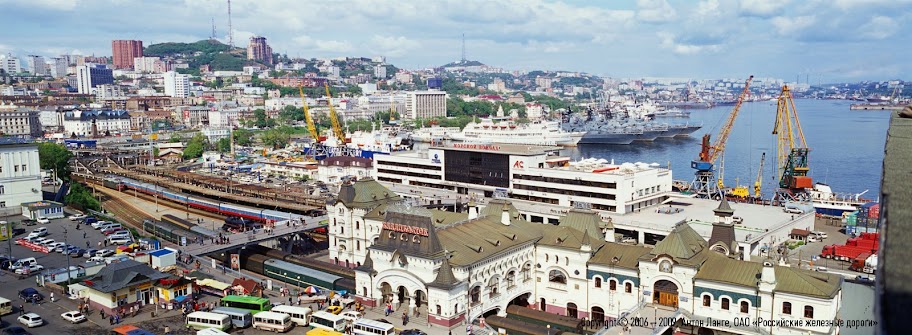
The “Rossiya” train arrives in Vladivostok – the terminal point of the Trans-Siberian Railway and the final destination of the 9,288-kilometer-long trip throughout the country. It is symbolic that the “younger brother” of Moscow’s Yaroslavsky Railway Station, designed by architect Fyodor Schechtel, is located next to the city’s Marine passenger terminal. Behind it, you can see grey steel navy ships frozen in the Golden Horn Bay. The military post on the bank of the bay, that is sheltered from all the winds, was established in 1860 by the crew of the Russian ship Manchoo. For more than a century since then, Vladivostok has been a personification of the power and inviolability of the Russian borders on the Pacific.

CHINA AT THE OLYMPICS: Gold medal achieved, next up: baby

Posted: Feb 16, 3:34p ET | Updated: Feb 16, 4:09p ET

VANCOUVER (Reuters) - Shen Xue and Zhao Hongbo delivered gold to end China's barren Olympic figure skating spell and immediately turned their thoughts to creating the next generation of champions. Wearing the new additions to their medal collection around their necks having broken Russia's 46-year hold on pairs gold, the giggling couple switched their focus to the idea of a new addition to their family.

"I think it's hard to continue skating so maybe it's time to have a baby," Shen told a news conference on Monday.

The duo came out of retirement for a fourth attempt at winning their sport's top prize and achieved their goal in spectacular style, earning a standing ovation from flag-waving fans as they ended the remarkable grip on the event held by the Russians since the 1964 Games in Innsbruck.

"This is a dream come true, we've had this dream for many many years. Every time we heard the anthem or saw the flag (when we won something), we wished it was the Olympic Games," said Zhao, a three-times world champion with Shen.

"Records are set to be broken at some point," he added. "This is an embodiment of the Olympic spirit," he said with Shen adding: "This is the attraction of the Olympic Games."

It was China's first Olympic figure skating gold and there were double celebrations after Pang Qing and Tong Jian won silver, with all four skaters holding on to the corners of their country's flag for the victory lap around the packed rink.

Related to this article

Slideshows

The runners-up's rousing routine had fans on their feet and Tong on his knees kissing the ice, confident they had done enough to lift themselves up from fourth on to the podium.

"I'm still very thrilled," said Tong. "When I kissed the ice I don't know what got into me -- I think a power made me do that."

While the Chinese skaters barely stopped smiling in the news conference, German bronze medallists Aliona Savchenko and Robin Szolkowy could not hide their disappointment.

Their glum faces only broke into a smile when Zhao was asked what advice he could give the Germans on how to lift themselves up enough to try for gold at the next Olympics.

Having won bronze in 2002 and 2006, Zhao has plenty of wisdom on the subject.

"Don't wait until you're 37 to get your gold," he told them.

View Reuters Article on NBC Olympics

OLYMPICS: Szolkowy's bronze medal blues

Germany's Aliona Savchenko and Robin Szolkowy pause for the cameras after taking the bronze medal in pairs

Germany's Aliona Savchenko and Robin Szolkowy pause for the cameras after taking the bronze medal in pairs

Posted: Feb 16, 4:00p ET | Updated: Feb 16, 4:13p ET

VANCOUVER (Reuters) - Robin Szolkowy had spun high into the air thousands of times as he performed the double axel to perfection in training and at numerous competitions. On Monday, that jump cost him the Olympic gold medal.

As double world champions, Szolkowy and Aliona Savchenko were front-runners for the pairs title at the Vancouver Games and after completing their opening high-flying triple toeloop-triple toeloop combination, they looked set for gold.

They piled up the marks when Savchecko next nailed the throw triple flip.

Then as the duo launched into the double axels, Savchenko landed the jump beautifully but could only watch in horror as her partner sprawled on the ice after slipping over on his blades.

With that, the 30-year-old knew his golden dreams had vanished. China's Shen Xue and Zhao Hongbo , and Pang Qing and Tong Jian won the top two medals.

"We are a little bit disappointed as the performance wasn't the one we wanted to show," a dejected Szolkowy, who could barely look at his bronze medal as it was placed around his neck, told reporters.

"The pressure built up maybe in your mind. It's one long program in four years. You have to skate clean if you want gold. We had one chance to perform the double axel and felt in the air that there was something wrong ... and it went wrong."

Germany's Aliona Savchenko and Robin Szolkowy perform their free skate in Vancouver

Canadian Jamie Sale, who won a silver in the pairs with David Pelletier at the 2002 Olympics before being awarded a duplicate gold medal with the Russian champions following a judging scandal, knew the pain the Germans were going through.

"You're the first and second loser when you win silver and bronze. If you're not expected to win a medal and get a silver or bronze, then that's fantastic," Sale told Reuters.

"But when you're going for gold and you're second or third ... it's not a good feeling."

Szolkowy certainly felt a loser on Monday but finally cracked a smile when offered advice by 36-year-old Zhao who struck gold at his fourth Olympics.

"My advice is don't wait till you're 37 to get gold," he jokingly told the crestfallen German.

View Reuters Article on NBC Olympics

CHINA AT THE OLYMPICS: Shen, Zhao Claim China's First Figure Skating Gold

China's Shen Xue and Zhao Hongbo reactChina's Shen Xue and Zhao Hongbo react after receiving the highest score, to win gold, for performing their pairs free program during the figure skating competition at the Vancouver 2010 Olympics in Vancouver, British Columbia.  Amy Sancetta/AP

February 16, 2010

by The Associated Press

Shen Xue beamed as she clutched the big shiny medal and husband Zhao Hongbo planted a kiss on her forehead.

The Chinese pair has stood on the podium many times in many different places.

Never on a stage like this.

Shen and Zhao won the Olympic gold medal that has driven them for nearly two decades Monday night, a prize tantalizing enough to lure them out of the cozy life of a happily retired married couple. It wasn't the best skate of their career - she tumbled onto his back during a lift - but it was good enough to win.

That's all that mattered.

"We've been in competitions for many years, and won other medals," Zhao said. "But every time we heard the national anthem and saw our flag being raised, we wished it was the Olympic Games. Today we've achieved our goal."

When they finished their program, Zhao knelt to the ice and buried his face in his hands while his wife patted his back. Their score of 216.57 points was more than three points better than teammates Pang Qing and Tong Jian.

It's the first gold in figure skating for China, and the second straight games the nation has won two of the pairs medals. The more shocking stat is that a Russian or Soviet couple didn't finish atop the Olympic podium for the first time since 1960, ending one of the longest winning streaks in sports.

Equally stunning, the Russians are leaving empty-handed, with no medals of any color.

"My belief is records are made to be broken," Zhao said.

Aliona Savchenko and Robin Szolkowy of Germany, winners of the last two world titles, managed only a bronze medal after a flawed free skate.

"I think everyone knows we're a little disappointed," Szolkowy said. "Our performance tonight was not the one we wanted to show."

For Shen and Zhao, it was the performance they had long imagined.

Bronze medalists at the last two Olympics, they retired after winning their third world title in 2007. They married, and lived the easy life of retirees, doing shows and appearances. But something was missing, and time was running out.

"So many years have been devoted to this dream," Zhao said.

They skated with the passion that has become their new trademark, the choreography of their "Adagio in G Minor" perfectly in tune to their music. She was so expressive, the audience could practically feel her every emotion.

And despite being veritable senior citizens at 31 (her) and 36 (him), they can still show the kids a thing or two. Their throw jumps were huge and flawless, the kind of tricks that would dazzle even the X-Games generation. Their throw triple salchow was so massive, she ought to get frequent flier points.

Shen and Zhao did make one mistake, and it was a shocker. She slipped down his back during one of their lifts, a move that's normally as easy as a crossover for them. The crowd gasped, and a look of exasperation crossed her face.

But they recovered quickly, and finished the program with a beautiful carry lift that circled half the ice. As they made their way off the ice, they detoured to the sideboards and Zhao practically leaped over them to hug longtime coach Yao Bin.

"It's been so many years," Zhao said, "to finally get this gold today is so exciting."

For the Americans, it was their worst showing in pairs. Amanda Evora and Mark Ladwig were 10th and U.S. champions Caydee Denney and Jeremy Barrett were 13th.

Pang and Tong were fourth after the short program. But while Savchenko-Szolkowy and Russia's Yuko Kavaguti and Alexander Smirnov stumbled, they soared.

Pang and Tong won the world title in 2006, but have struggled ever since to recapture that brilliance. Oh, did they pick the right place to do it, winning the free skate to claim the silver medal.

"Everyone's standards are very close," Tong said. "It's just that we performed a little better today."

That's putting it mildly.

Their athleticism is simply stunning, tricks that defy gravity and comprehension. He tossed her as easily as a pillow on their throw triple twist and she soared so high she probably could have changed a lightbulb or two in the arena. Their throw jumps were, by far, the best of the night, her blade carving the ice on the landings with the precision of a surgeon's knife.

But like Shen and Zhao, what's most impressive is how Pang and Tong's performance quality has grown. Their interpretation of "Impossible Dream" could play on any Broadway stage, and the flamenco portion of their program was pure sizzle.

"Every moment is perfection," Tong said.

They were beaming for the last 30 seconds, even while doing one of those scary lifts. When they finished, he bowed and kissed the ice.

"I don't know what got into me," Tong said.

Savchenko and Szolkowy were just .70 points behind Shen and Zhao after the short program, a margin so small the Germans could change the standings with just one element.

They changed all right.

Szolkowy, with a long history of botching jumps, had to fight to save the opening triple toe loop-double toe sequence. But he had no chance on their side-by-side double axels, drawing a gasp from the crowd as he fell to the ice - taking their gold medal hopes with him.

They were also noticeably out-of-sync on their combination spin; he came to an upright position while she was still turning, crouched low to the ice.

"It's the Winter Olympic Games, one long program in four years - of course you want to skate clean. And you have to skate clean if you want the gold medal," Szolkowy said. "This one chance we had, and maybe it's too much."

Any chance Kavaguti and Smirnov had of keeping that Russian winning streak going ended when she bailed out on their throw quadruple salchow and turned it into a triple. Not a good one, either, since she skidded and twisted across the ice on the landing.

Despite their low finishes - the best U.S. couple has always finished seventh or better - the inexperienced Americans showed promise. If they can improve their singles elements, they have a real shot at climbing the international ranks, maybe even as high as the medals podium in 2014.

Evora and Ladwig's signature carry lift alone is worth the price of admission. With her hands outstretched, he supports her one-handed for most of the lift. When he does finally use his second hand, it's only because he's picked up one foot and is skating backward. Try doing that on flat ground, let alone on a sheet of unforgiving ice.

But they need to clean up those side-by-side jumps and spins. Evora two-footed the first jump in their triple toe-double toe combo and he doubled it. She also turned out of the landing on their double axels. Denney and Barrett's side-by-side triple toes were downgraded to doubles, and each erred on their double axel sequence,

"It's an inspiration for me to see these Olympic champions, and what it takes is a lifetime of work and sacrifices," Evora said. "So we know there is still hope for us in the future."

View Article on NPR

N. KOREA: North Korea marks Kim Jong Il's birthday

This undated picture, released from North Korea's official Korean Central News Agency on December 19, 2009, shows Kim Jong-il inspecting the Kimchaek Iron and Steel Complex at Kimchaek city in North Hamgyong province.

This undated picture, released from North Korea's official Korean Central News Agency on December 19, 2009, shows Kim Jong-il inspecting the Kimchaek Iron and Steel Complex at Kimchaek city in North Hamgyong province.

February 15, 2010 10:01 p.m. EST

(CNN) -- North Korea celebrated the 68th birthday of Kim Jong Il on Tuesday with performances and festivals lauding the "Dear Leader," the country's state news agency reported.

Marked on the national calendar as a public holiday, "celebrations" included song and dance performances, and an ice sculpture festival, while senior party officials attended the screening of a documentary on Kim's "immortal exploits," North Korea's official KCNA news agency reported.

As a tradition on the occasion, on Saturday the regime gave children around the nation presents.

North Korea received rare animals as gifts for Kim from state and party leaders and other prominent figures of countries and overseas Koreans, KCNA reported.

RELATED TOPICS

View Article on CNN

CHINA: Mandarin Chinese 101

Pinyin Pronunciation Guide:

“Q” is pronounced “ch”

“Qu” is pronounced “chree”

“X” is pronounced “sh”

“Zh” is pronounced “dj”

“Sh” is pronounced “ss” with your tongue curled toward the roof of your mouth

“I” is pronounced “ee”

“ao” is pronounced “ow”

“uo” is pronounced “whoa”

“ie” is pronounced “eeyeh”

“ian” is pronounced “eeyen”

“ai” is pronounced like the letter “I”

“ei” is pronounced like the letter “a”

Helpful Phrases

Nihao or Nihao ma: “Hello” or “How are you?” Universal greeting.

Xie Xie: "Thank you"

Zai Jian: "Goodbye"

Duo shao qian?: “How much?”

Tai gui!: “Too expensive!” Use for haggling.

Zhe ge: "This one"

Zai na li?: “Where is it?”

Qu na li?: “Where are you going?"

Fu Wu Ren: Server. You might also hear Xiao Jie,” meaning waitress, or literally “miss.”

Xiao chi: Street food or snacks

Xiao long bao: Shanghai’s renowned steamed little buns, stuffed with pork and crabmeat

Mian: Noodles

Source:  National Geographic Traveler

Download FREE Chinese Language Wallet Guide

General

Mandarin Chinese is spoken as a native language by about 900 million people. It's the most widely spoken language in the world, the official language of mainland China and Taiwan, and one of the official languages of Singapore. The other major Chinese dialect, Cantonese, is spoken in Hong Kong, Macau, the Guangdong ("Canton") province and Guangxi autonomous region in China, and by many Chinese living outside of China. However, we will only cover Mandarin Chinese here.

The Chinese phrases seen here are all written in pīnyīn, the standard romanization alphabet (transliteration) for Mandarin Chinese used in mainland China.

Pronunciation

For beginners, Chinese pronunciation can be intimidating at first. Unlike English, Chinese is a tonal language, which means that every syllable in the language is pronounced with a different tone. These tones are very important, because if you pronounce a syllable with the wrong tone, it can mean something entirely different than what you intended.

Using the vowel a as an example, the first tone, ā, is high and neutral. The second tone, á, goes from middle to high, as if you were asking a question. The third tone, ǎ, goes from middle to low to high, as if stretching out a question. Finally, the fourth tone à goes from high to low, as if you were answering a question. There is also a neutral tone, a, which is unmarked and, of course, neutral in tone.

Here are some examples of how tone can affect meaning: liū (to skate), liú (to flow), liǔ (willow), liù (six). An example of a neutral tone is ma, which is a Chinese particle that goes at the end of a sentence to indicate that it is a question, as in Nǐ hǎo ma? (How are you?)

Although this may seem difficult, pronunciation and recognition of the tones will eventually come naturally with — what else? — time and practice.

Vocabulary

Chinese words are made up of one or more syllables (a syllable is equal to one character in Chinese writing). When dealing with a word that contains more than one syllable, it's important to realize that each syllable in that word also has its own, independent meaning or use. Once you start to learn the meaning of some common syllables, then you can often deconstruct the meaning of the full word.

For example, zhōng is a syllable that means middle or central. It is used in many, many words, including zhōngxué (middle school), zhōngwǔ (noon), zhōngfàn (lunch), zhōngnián (middle-aged), Zhōngdōng (Middle East), and, most importantly, Zhōngguó (China).

The other syllables in these words also help indicate meaning: xué in zhōngxué means study, in zhōngwǔ means noon, fàn in zhōngfàn means meal, nián in zhōngnián means year, dōng in Zhōngdōng means east, and guó in Zhōngguó means country. As you can see, in Chinese, China literally means central country or, as it's often translated, middle kingdom.

Grammar

Although pronunciation, vocabulary and, not surprisingly, reading and writing can be a challenge for many students of Chinese, Chinese grammar is actually relatively straightforward.

  • There are no conjugated verb forms in Chinese, which means that Chinese verbs don't change form based on subject (I, you, he/she, etc.) or on when the action is taking place (past, present, future, etc.). So, for example, the Chinese verb shì can mean to be, is, am, are, was, were, and so on.
  • There are also no plural forms in Chinese. In other words, xuésheng (student) can be translated as either student or students, depending on the context.
  • There are no articles (the, a/an) in Chinese. Therefore, xuésheng can actually mean any of the following: student, a student, the student, etc.
  • Unlike many other languages, such as French and German, there is no gender in Chinese.
  • Chinese doesn't make it too easy for you, however. For instance, it does have special words called "measure words." Measure words are used to quantify a noun, and usually have to be placed between a number or demonstrative (this, that) and a noun. There are different measure words for different nouns. Let's look at the phrase three books as an example. In Chinese, you wouldn't just say three books, you would say sān běn shū, which breaks down as sān (three) + běn (measure word for books) + shū (book/books).

SOURCE:  FODOR’S

JAPAN: Useful Words When Traveling in Japan - Konbini

clip_image001An important factor in a successful trip abroad is knowing how to find what you need when you need it. Whether you require a role of film during a photography outing, bathroom necessities you forgot to pack or just a quick snack on the go, having access to these things can make or break your trip.

Luckily for you, your trip to Japan is ensured to go off without a hitch due to the ubiquitous presence of the konbini. Konbini, short for "convenience store," is a staple of Japanese life. Though it takes its name from the term that we in North America associate with stores like 7-11 (which, coincidentally, also exist in Japan), the konbini is a lot more like a cross between a deli and a convenience store. It has everything from snacks, drinks and full meals to toiletries, electronics, books, magazines and other daily necessities which make it live up to its name as being truly convenient. Adding to its convenience are services such as digital printing, copying/faxing, ATM/billing, as well as a ticketing box office accessed through automated multi-purpose terminals found in most stores.

Well-known konbini chains in Japan include Lawson, Family Mart, and the aforementioned 7-11. They can be found on pretty much every corner in every downtown area of every city, and are also dispersed among the residential and suburban areas of Japan, ensuring that one is close by wherever you may find yourself in your travels. And because it's Japan, you'll experience first-class service and hospitality, from the "Irrasshaimase!" upon entering to the "Arigato gozaimashita!" as you leave.

Source:  Japan National Tourist Organization

RUSSIA: On this day: 16 February

On February 16, 1938, Josef Stalin prohibited the publication of a book by Vera Smirnova, “Short Stories about Stalin’s childhood”, and recommended its manuscript be burnt.

Stalin’s letter to the publishing house “Detizdat” about that book said: “The book is full of factual errors, misrepresentations, exaggerations and panegyrics. The author was misled by devotees of fairytales, by liars and bootlickers. It is sad, but true, and the main thing is, this book has a tendency to root the personality cult, the cult of the chiefs and impeccable heroes, in the minds of Soviet children and of Soviet people in general. I recommend burning the book”.

The book was not published, and it is unknown whether the manuscript was burned or not. However, Vera Smirnova was not punished. She wrote many other books and was even decorated with an order.

Marxism-Leninism, the ideological basis of Soviet power, preaches the cult of equality and condemns “leaderism”, but it is hard to believe that Stalin opposed the personality cult. Soviet propaganda created the image of “the great chief and the great teacher”. Many Soviet collective farms, plants and cities were named after Stalin, and after World War II, several cities in Eastern Europe were also named after him. Stalin’s name was mentioned in the first version of the USSR hymn, and the schoolbook “Native Language” began with a short story about Stalin’s childhood. All collections of folklore included several “folklore” tales and rhymes about Stalin.

In Stalin’s era, the history of the Revolution and the Civil War was rewritten more then once. The deeds of many lesser-known historical figures were ascribed to Stalin and his comrades. The Bolshevik Party was described as the only revolutionary power, and the role of other parties was disclaimed. In addition, at the end of Stalin’s era, the history of Ivan the Terrible’s rule and of Peter I’s reforms was rewritten also. Stalin called the Oprichnina - Ivan’s uncontrollable army that had terrified the whole country - “a progressive type of force”. Peter I, according to Stalin’s opinion, “opened the doors to the West too widely, and many bad things flew in.”

Stalin rejected praise at least twice more. He did not want to see his portrait on the decorations “Victory Order” and “Glory Order”, and opposed the naming of the Moscow State University after him.

View Article in RT

CHINA: Insider Trading Charge in China

Huang Guangyu in 2006.   Jason Lee/Reuters

February 15, 2010

By KEITH BRADSHER

HONG KONG — The former chairman of one of China’s largest electronics companies has been charged with insider trading, offering bribes and running illegal operations, the state-run China News Service said.

Huang Guangyu’s case was sent to the Beijing Municipal Second Intermediate People’s Court for trial, and the people accused of being his accomplices have also been indicted, China News Service said Saturday without identifying those people.

The charges against Mr. Huang had long been expected. He has been in detention since November 2008, and Chinese officials subsequently took the uncommon step of publicly confirming that he was under investigation by the Ministry of Public Security.

He resigned as chairman of the electronics company, Gome, two months after his detention.

He has been held incommunicado, as is common in China during investigations, and could not be reached Sunday for comment.

Sunday marks the first day of the Lunar New Year holiday, with government and corporate offices closed across China and tens of millions of people going to their hometowns to celebrate.

The long-running scandal over Mr. Huang’s alleged activities has already tarnished the careers of a series of Chinese officials. Zhu Ying, the former deputy director of the Shanghai Municipal Public Security Bureau, was expelled from the municipal discipline inspection committee of the Communist Party last December. The committee issued a statement at the time saying, without providing details, that he had been stripped of his membership in connection with the investigation of Mr. Huang.

The investigation of Mr. Huang has also resulted in further reviews at the Ministry of Public Security of how the ministry’s economic crimes section had handled the affair, according to the state-run news agency Xinhua, which is larger than China News Service.

Before his arrest, Mr. Huang had been one of the wealthiest people in China, with Forbes magazine estimating his wealth then at $2.7 billion and the Hurun Report, which also keeps track of the wealth of Chinese business leaders, estimating that he was worth $6.3 billion.

View Article in the New York Times

Monday, February 15, 2010

OLYMPICS: Russian figure skating coach praises Japanese-born Olympian

February 16, 2010

(Mainichi Japan)

As the figure skating pair Yuko Kawaguchi and Alexander Smirnov, representing Russia, finished their performance in the short program at the Vancouver 2010 Winter Olympics on Sunday (Monday Japan time), their coach Tamara Moskvina praised the duo with a smile.

"Excellent!" said the Russian coach and kissed her Japanese student Kawaguchi, 28, who was wearing a white costume modeled after a swan.

Moskvina, 68, may have been a run-of-the-mill kind of skater, but started to show her extraordinary talent after she switched to concentrate on her coaching career. She has trained four gold and four silver medalist pairs since the Sarajevo Winter Olympics in 1984.

It was during the Nagano Winter Olympics in 1998 that Moskvina first came into contact with Kawaguchi. The young Japanese girl was fascinated with the skating performance of the pair Moskvina trained and sent a fax message asking her for training.

At first, Moskvina turned down Kawaguchi's request, thinking she was just an enthusiastic figure skating fan. However, when Kawaguchi continued to show her eagerness to practice in Russia, Moskvina finally decided to accept the Japanese student in 1999.

"She is a smart skater who never forgets what she has learned," thought Moskvina, who immediately noticed Kawaguchi's potential.

Kawaguchi is only 157 centimeters tall and is small compared to other European skaters. But the Russian coach noticed her student's outstanding physical ability. It was also Moskvina who advised Kawaguchi to switch to pair skating after she had hard time achieving satisfactory results in single performance.

More than anything, Moskvina appreciates the iron will of her Japanese student, who moved to Russia without knowing the language in her ardent desire to become a better figure skater. Furthermore, Kawaguchi recently gave up her Japanese citizenship and obtained Russian nationality to participate in the Olympic Games.

"I am so proud of Yuko. And I think Japanese people should be proud of her too. She is a strong Japanese girl who spares no effort for her dream," said the great mentor, who has been guiding Kawaguchi for over a decade.

"Like Tamara, I'd like to contribute to the ice skating not only as an athlete but also as a business operator (such as a skating club manager)," Kawaguchi said.

In the free skate scheduled for Monday, the Russian pair will compete against tough rivals from China and Germany, who finished first and second in the short program. But Moskvina is confident.

"I know it is going to be a tough competition, but I can feel the sense of victory," she said.

Click here for the original Japanese story

View Mainichi Article

CHINA AT THE OLYMPICS: Figure Skating: China's Shen and Zhao claim pairs gold


Vancouver (AFP) - Shen Xue and Zhao Hongbo gave China their first ever Olympic figure skating title when they won gold in the pairs event in Vancouver on Monday.

The husband-and-wife team lead a Chinese 1-2 ahead of teammates Pang Qing and Tong Jian with Germany's reigning two-time world champions Aliona Savchenko and Robin Szolkowy taking bronze after the free skating final.

View article...